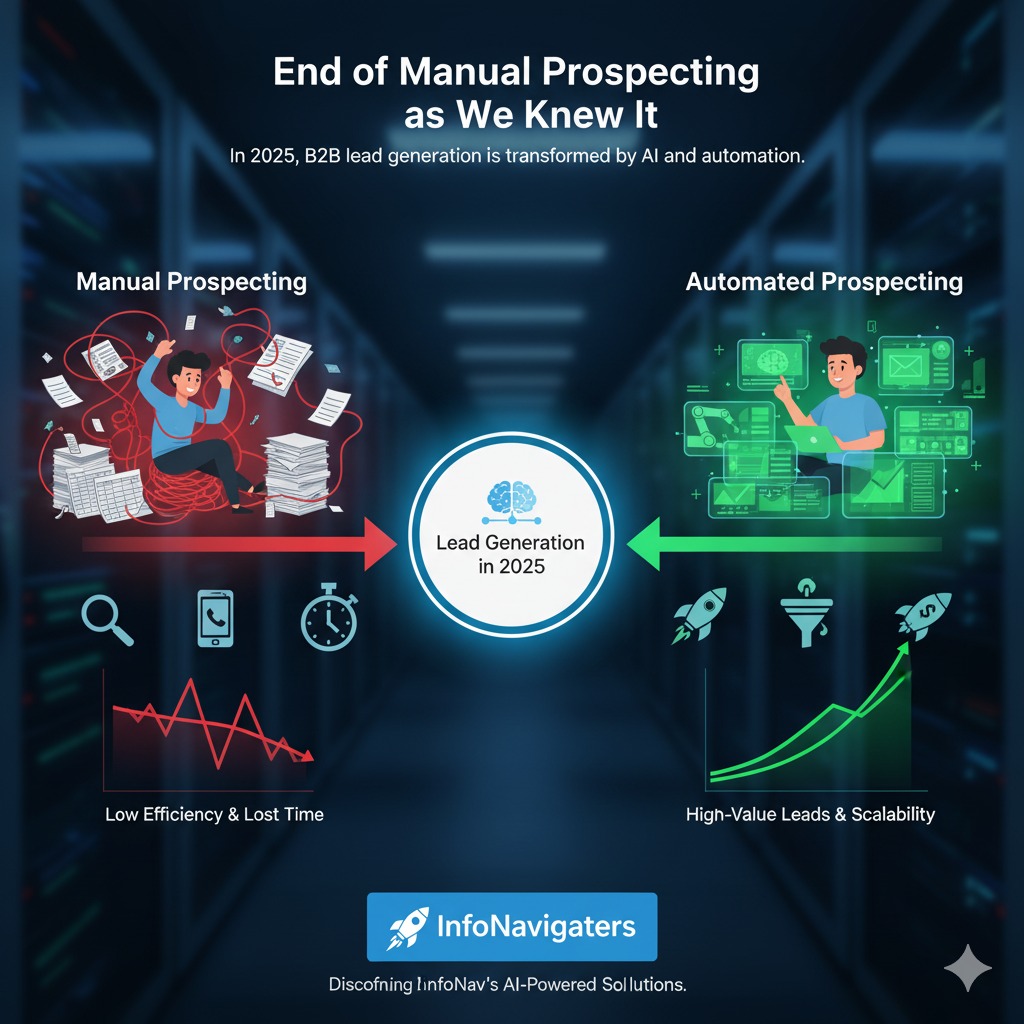
Introduction: The End of Manual Prospecting as We Knew It
In the fast-evolving world of B2B lead generation, time is everything. Traditional prospecting — once dependent on manual outreach, spreadsheets, and endless follow-ups — is now being transformed by automation tools and AI-powered systems. In 2025, B2B companies that still rely on manual prospecting are falling behind competitors who automate their workflows, personalize outreach at scale, and identify high-value leads in minutes. At InfoNav, we’ve witnessed firsthand how automation isn’t just changing how businesses find prospects — it’s redefining how relationships are built, leads are qualified, and sales pipelines are managed.
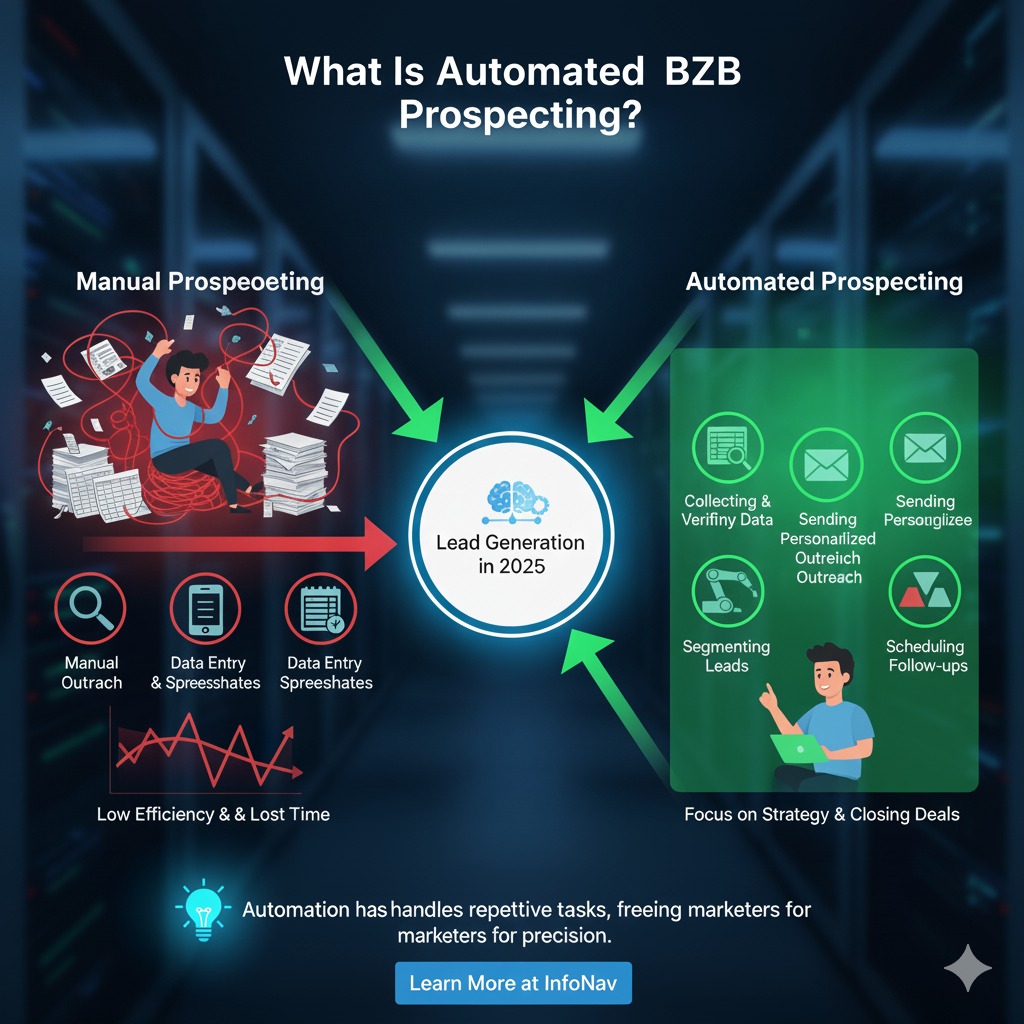
What Is Automated B2B Prospecting?
Automated B2B prospecting uses software, AI, and workflow tools to handle repetitive tasks like: Collecting and verifying company contact data Sending personalized emails or LinkedIn messages Segmenting leads based on intent and engagement Scheduling follow-ups automatically Instead of spending hours researching and writing outreach messages manually, automation allows marketers to focus on strategy and closing deals.
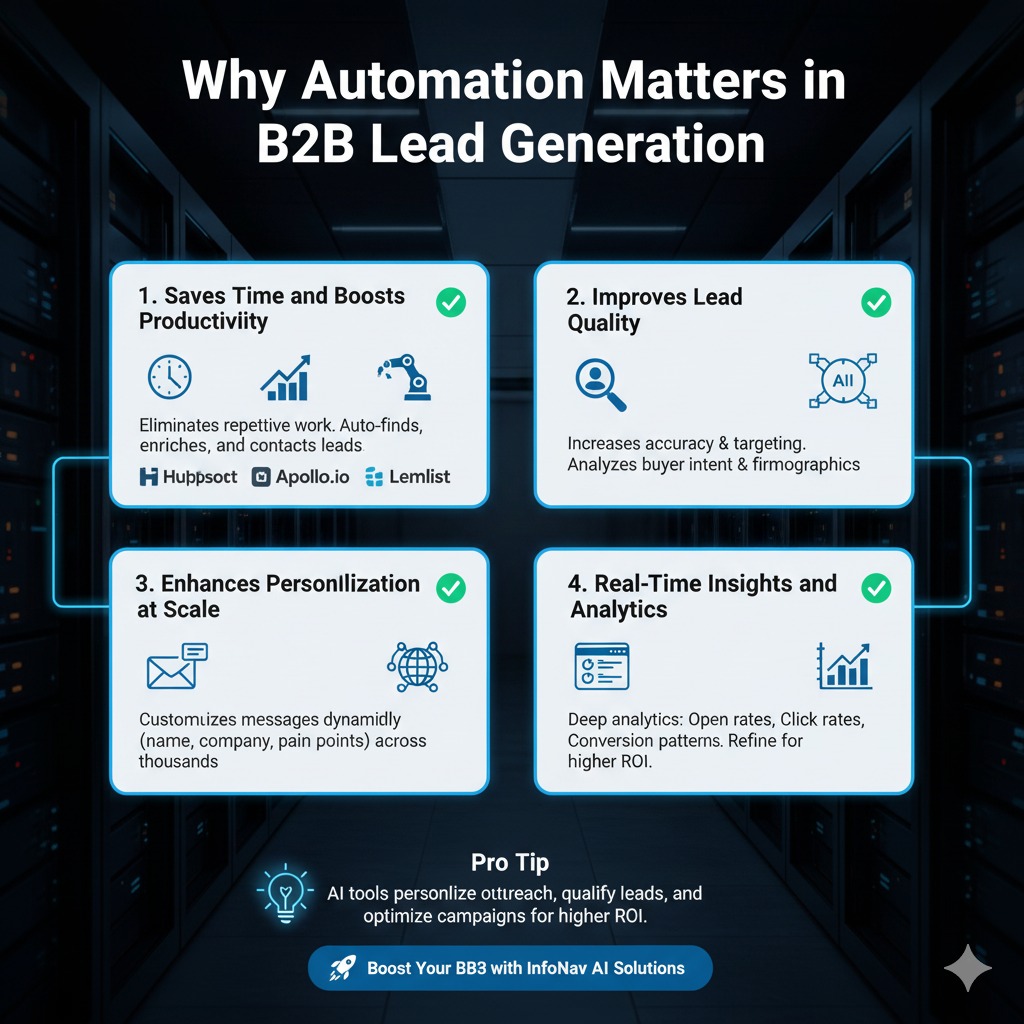
Why Automation Matters in B2B Lead Generation
1. Saves Time and Boosts Productivity Automation eliminates repetitive work — freeing up hours each week. Tools like HubSpot, Apollo.io, and Lemlist can automatically find, enrich, and contact leads without manual input. 2. Improves Lead Quality Smart automation doesn’t just increase volume; it improves accuracy and targeting. AI-based tools analyze buyer intent, firmographics, and engagement history to ensure you’re connecting with decision-makers who matter. 3. Enhances Personalization at Scale Thanks to AI, personalization no longer means writing one-on-one emails. Modern automation tools can customize messages dynamically — including the recipient’s name, company, and industry pain points — across thousands of leads. 4. Real-Time Insights and Analytics Automation platforms provide deep analytics into open rates, click rates, and conversion patterns, allowing teams to refine campaigns continuously for higher ROI.
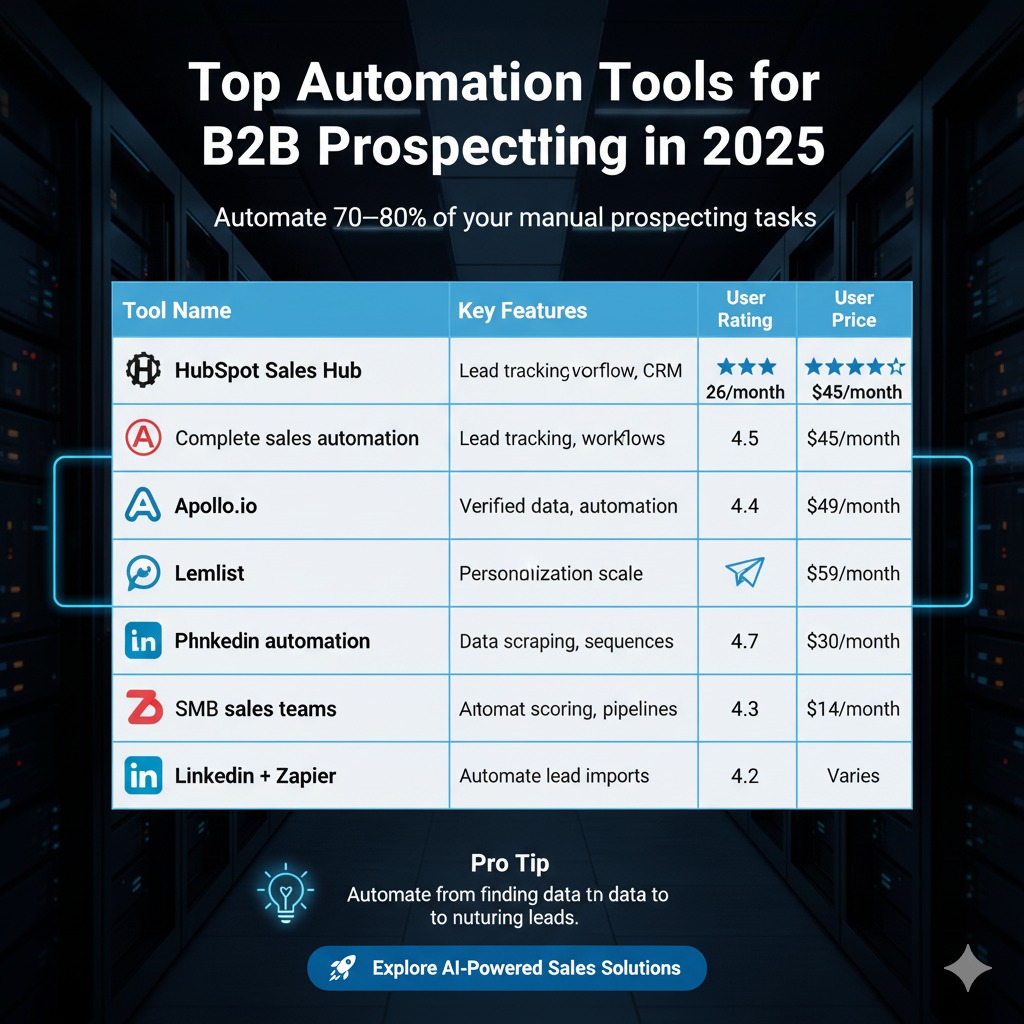
Top Automation Tools for B2B Prospecting in 2025
| Tool Name | Best For | Key Features |
|---|---|---|
| HubSpot Sales Hub | Complete sales automation | Lead tracking, follow-up workflows, CRM integration |
| Apollo.io | Lead discovery | Verified data, email automation, analytics |
| Lemlist | Cold email automation | Personalization at scale, multichannel outreach |
| Phantombuster | LinkedIn automation | Data scraping, connection sequences |
| Zoho CRM | SMB sales teams | Automation pipelines, lead scoring, workflows |
| LinkedIn Sales Navigator + Zapier | Smart integrations | Automate lead imports, track responses |
These tools empower teams to automate 70–80% of their manual prospecting — from finding contact data to nurturing leads until they’re sales-ready.
The Role of AI in Modern B2B Prospecting
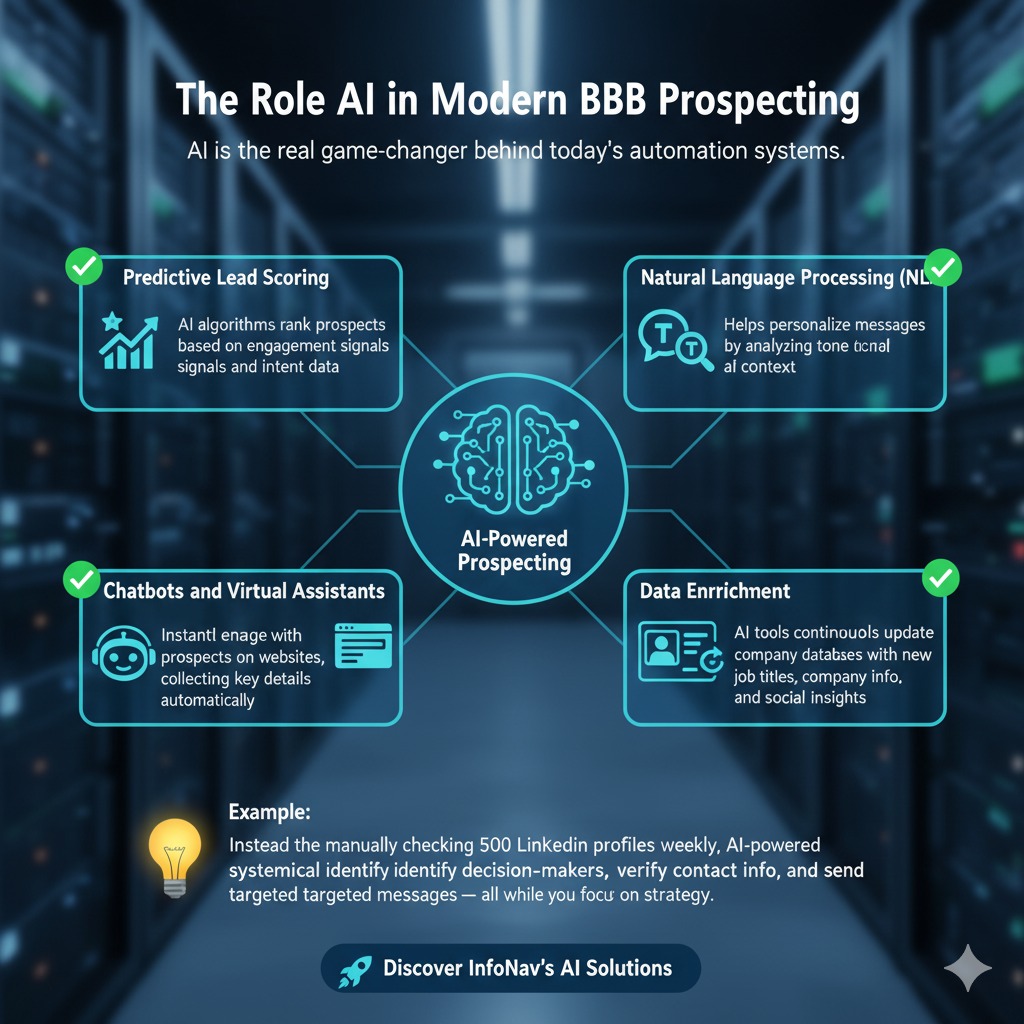
AI is the real game-changer behind today’s automation systems. Here’s how: Predictive Lead Scoring: AI algorithms rank prospects based on engagement signals and intent data. Natural Language Processing (NLP): Helps personalize messages by analyzing tone and context. Chatbots and Virtual Assistants: Instantly engage with prospects on websites, collecting key details automatically. Data Enrichment: AI tools continuously update company databases with new job titles, company info, and social insights. 💡 Example: Instead of manually checking 500 LinkedIn profiles weekly, AI-powered systems can automatically identify decision-makers, verify contact info, and send targeted messages — all while you focus on strategy.
How Automation Improves User Experience for B2B Buyers
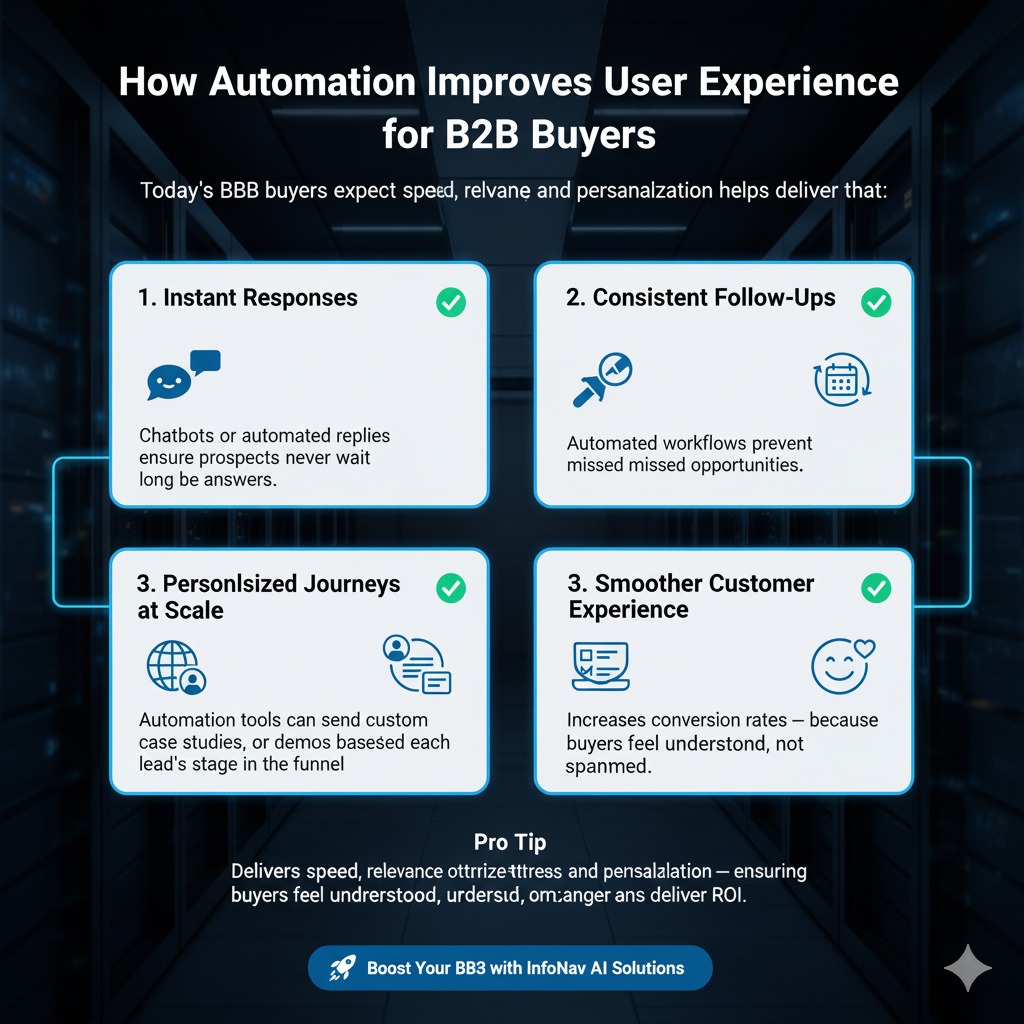
Today’s B2B buyers expect speed, relevance, and personalization. Automation helps deliver that: Instant Responses: Chatbots or automated replies ensure prospects never wait long for answers. Consistent Follow-Ups: Automated workflows prevent missed opportunities. Personalized Journeys: Automation tools can send custom content, case studies, or demos based on each lead’s stage in the funnel. This creates a smoother customer experience and increases conversion rates — because buyers feel understood, not spammed.
Automation + Human Touch: The Perfect Balance
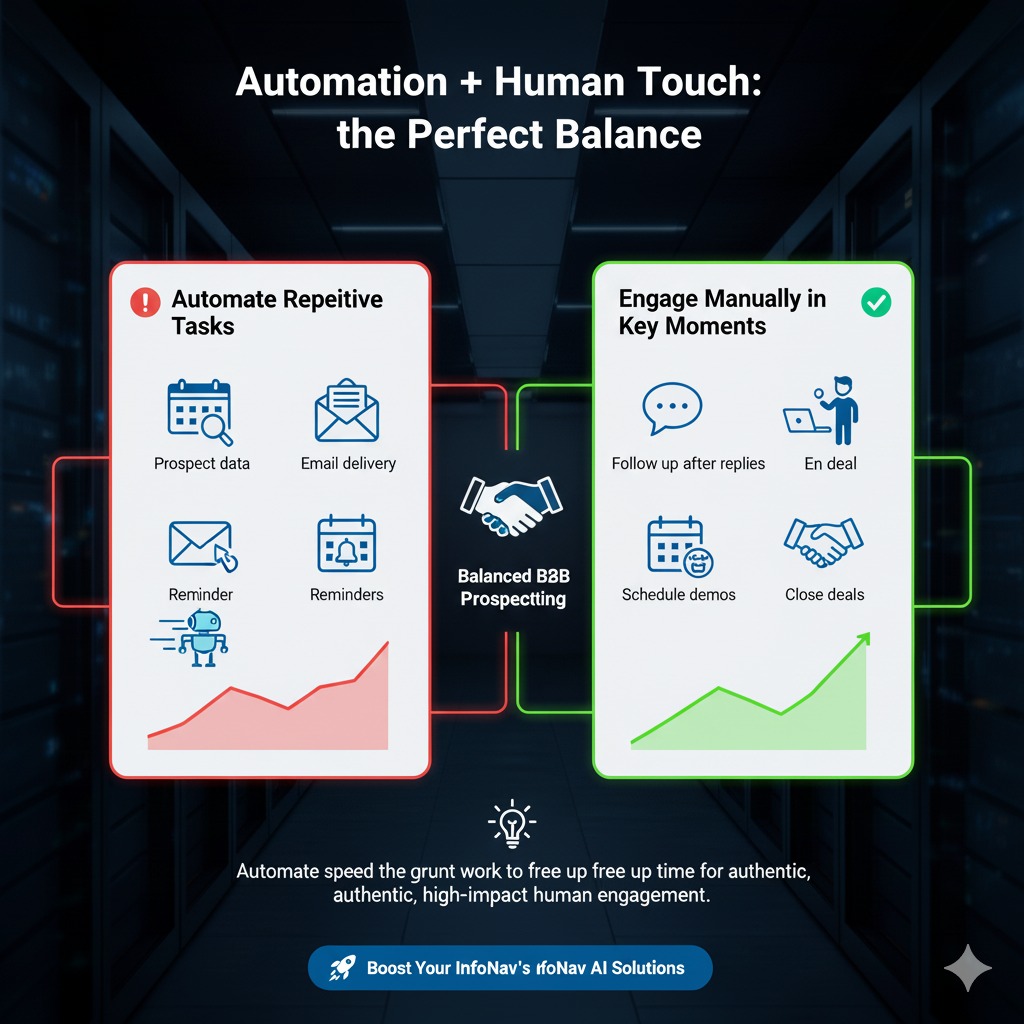
While automation can handle data and workflows, the human element still matters. Successful agencies and sales teams combine automation with authentic communication. Here’s how to balance both: Automate Repetitive Tasks: Prospect data, email delivery, reminders. Add Human Review: Personalize outreach before sending. Engage Manually in Key Moments: Follow up after replies, schedule demos, close deals. Automation is the assistant — not the salesperson.
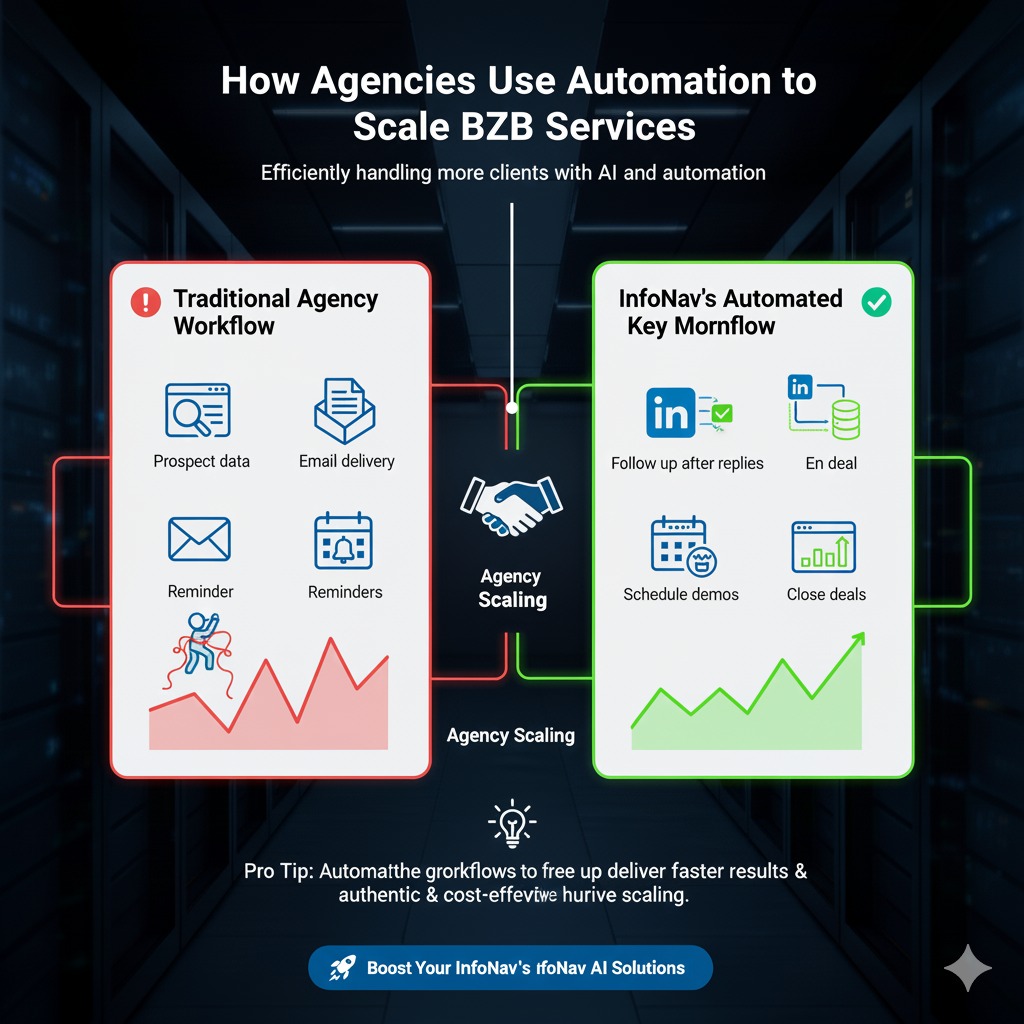
How Agencies Use Automation to Scale B2B Services
Marketing and lead generation agencies — especially in Pakistan and South Asia — are using automation to handle more clients efficiently. At InfoNav, our team integrates automation into: LinkedIn lead generation campaigns Email list building and validation CRM management and follow-ups Client reporting dashboards The result? Higher-quality leads, faster results, and cost-effective scaling for small to mid-sized businesses.
Common Mistakes to Avoid When Automating Prospecting
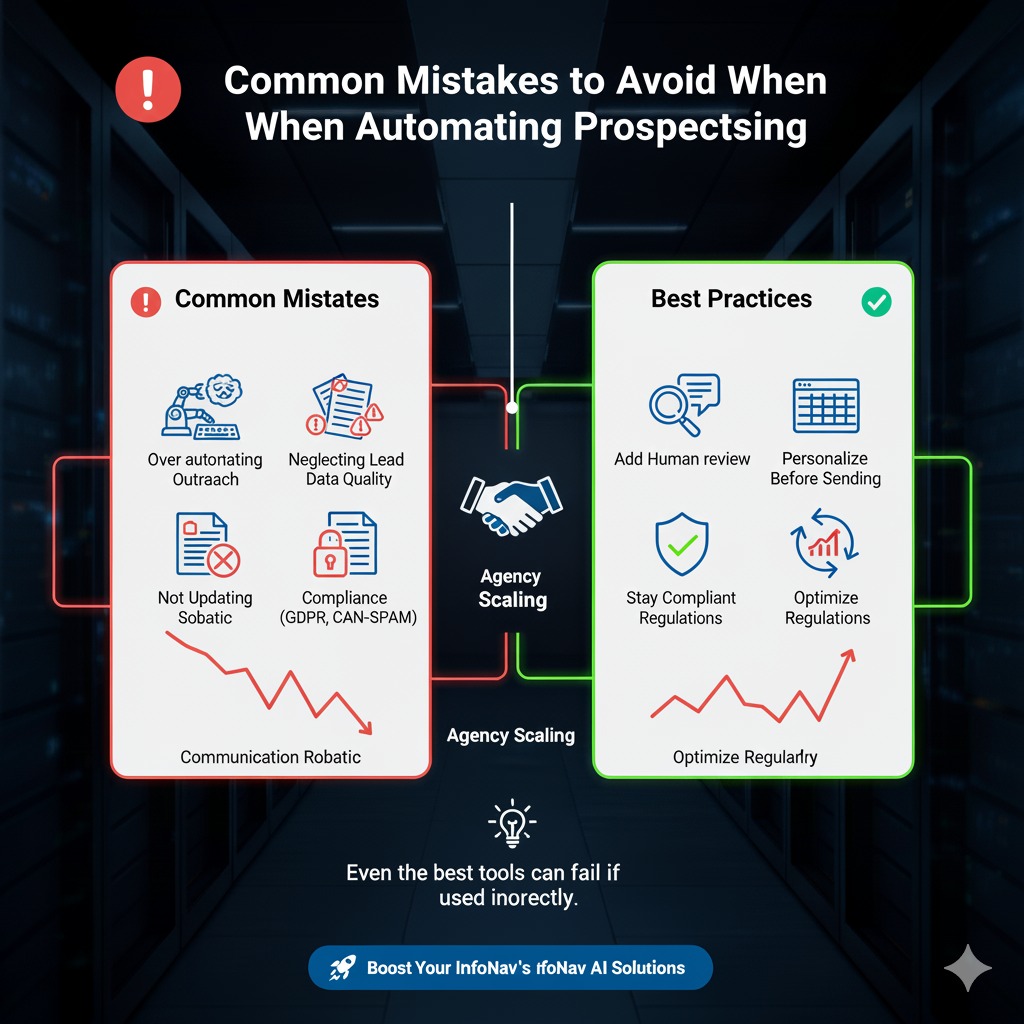
Even the best tools can fail if used incorrectly. Avoid these traps: Over-automating outreach (makes communication robotic) Neglecting lead data quality Ignoring compliance (GDPR, CAN-SPAM) Not updating automation sequences regularly Always test, personalize, and refine.
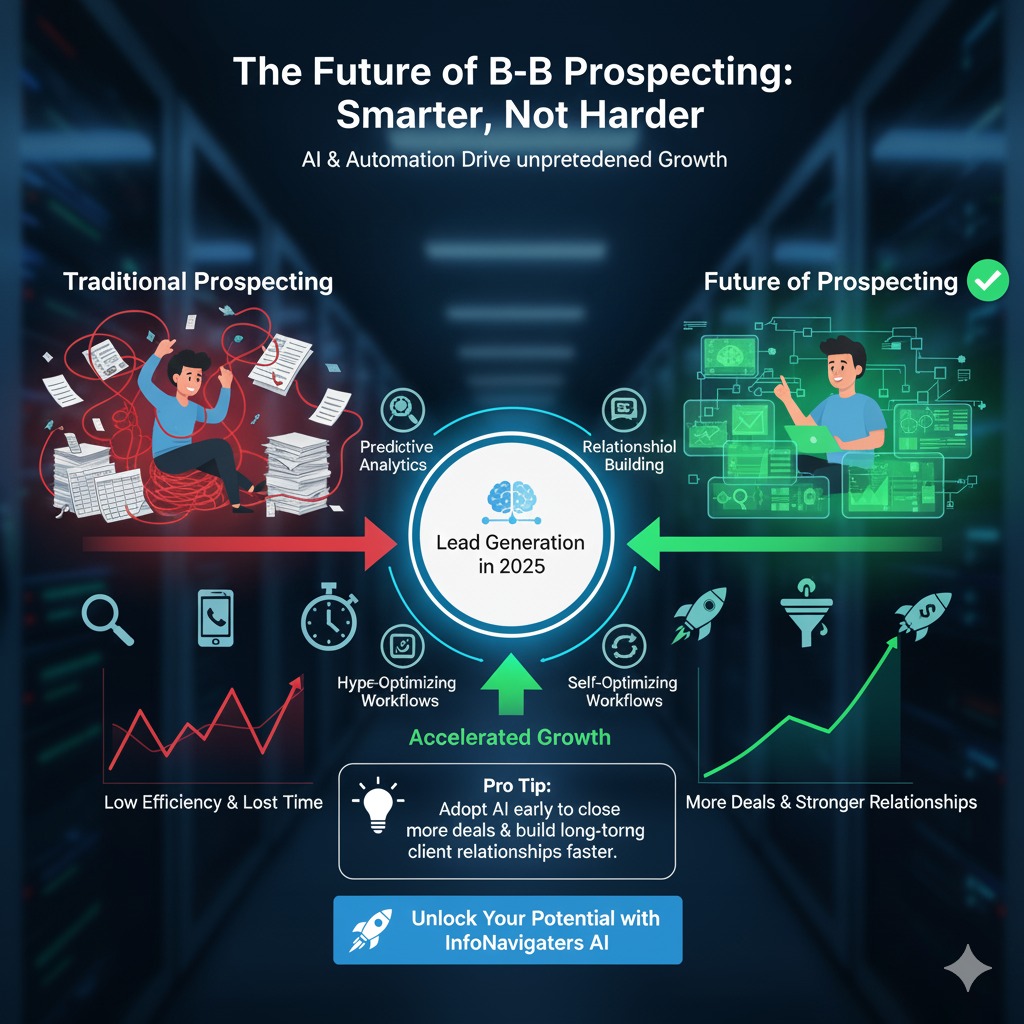
The Future of B2B Prospecting: Smarter, Not Harder
By 2025 and beyond, automation will continue evolving with AI-driven personalization, predictive analytics, and self-optimizing workflows. Businesses adopting these technologies early will not only close more deals but also build long-term relationships with qualified clients faster than ever before.
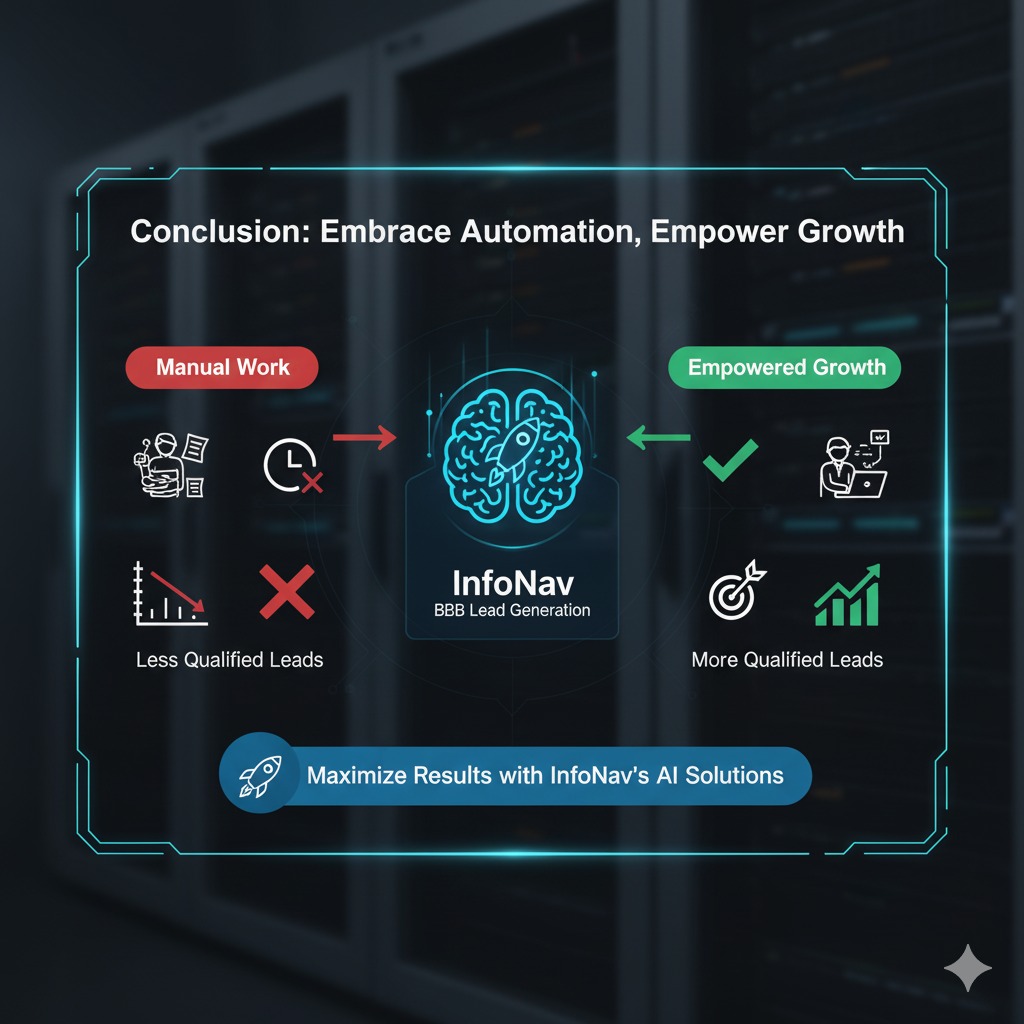
Conclusion: Embrace Automation, Empower Growth
Automation isn’t replacing humans — it’s empowering them. For B2B companies, integrating the right tools means more qualified leads, less manual work, and smarter decisions. If you’re ready to scale your outreach and maximize results, explore how InfoNav’s B2B Lead Generation Services can help you leverage automation to reach your ideal clients — efficiently and effectively.